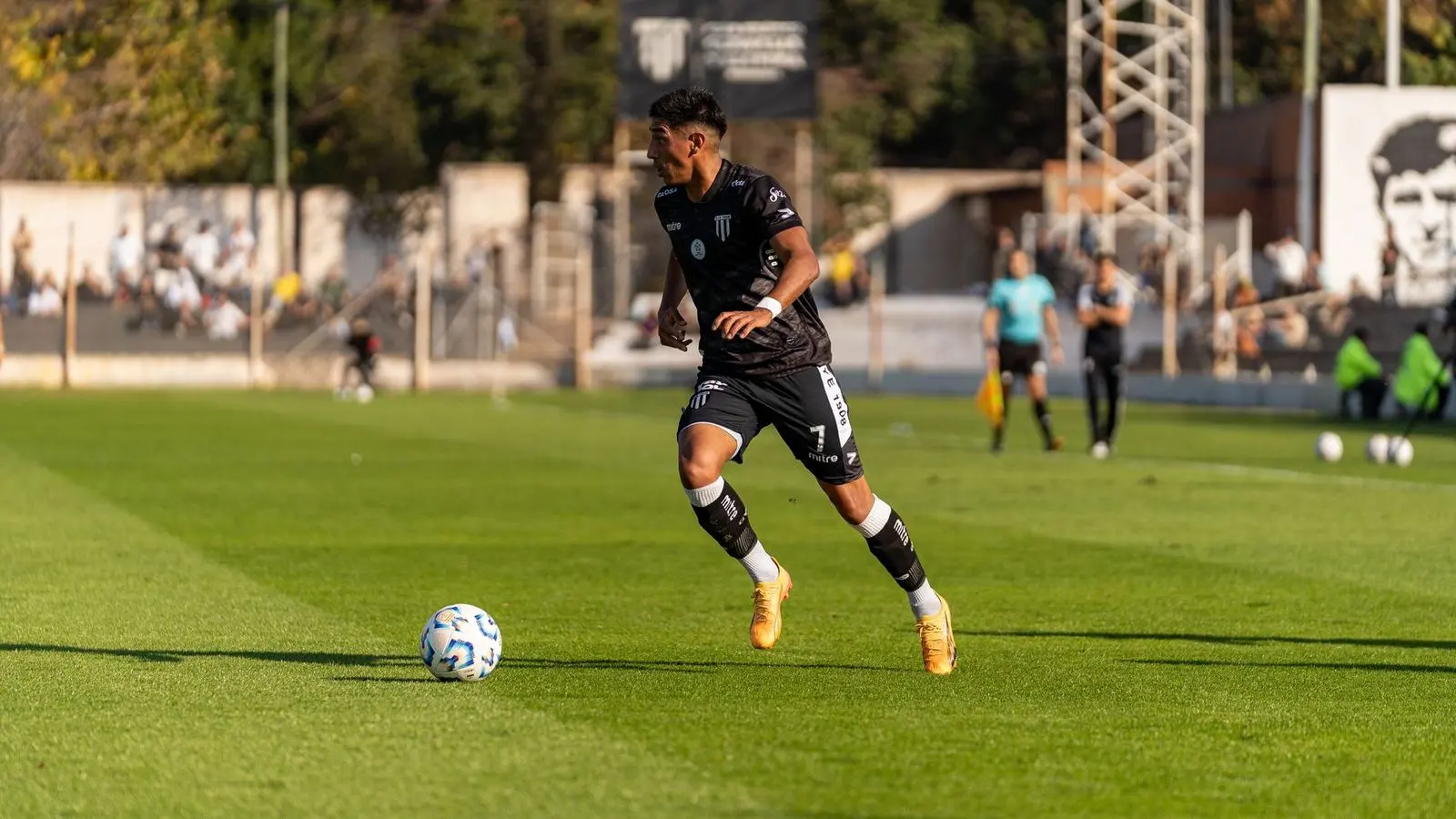

Not sure how full back vs wing back works when you watch a match? A full back defends wide in a back four, while a wing-back patrols the whole flank in a back-three system with more licence to attack.
This guide sits inside our wider look at football player positions, so you can read it alongside the other role breakdowns.
| Item | Value |
|---|---|
| Full-back’s place in the team | Wide defender in a back four |
| Wing-back’s place in the team | Wide player in a back-three formation who drops into a back five when defending |
| Formations that use wing-backs | 3-5-2, 3-4-3 and 3-4-1-2 |
| Main difference | Wing-back has more licence to attack; full-back has more emphasis on defence |
| Liverpool’s full-backs in 2019-20 | 25 goals set up, six scored |
These figures come from Coaches’ Voice and Goal. They can change, so check the source before you rely on them.
What does a full back do?
A full back is a wide defender, and Sports Illustrated notes the position is also called a left-back or a right-back. In a traditional shape, the pair sit on either side of the back line.
The classic brief is defensive. According to the same Sports Illustrated guide, their job is to mark the opposing team’s wingers and close down open space when the other side counter-attacks.
The modern version asks for more. PlayerData says modern fullbacks are required to defend wide areas while also being expected, and judged, on supporting attacks with overlapping runs.
In practice a full back’s day usually covers three tasks:
- Marking the winger on their side and shutting down space behind the midfield.
- Staying switched on for one-on-one duels and runs behind them.
- Joining attacks when the team has the ball, often by overlapping a teammate.
What does a wing-back do?
A wing-back is, in Goal’s words, essentially a mixture of a full-back and a winger. They play on either side of the defence and help give the team width.
The position belongs to systems with three central defenders. Coaches’ Voice lists 3-5-2, 3-4-3 and 3-4-1-2 as typical examples, and adds that the wing-backs drop back either side of the three centre-backs to form a back five when their team defends.
Going forward, Goal says a wing-back is expected to get forward as much as possible to help the attack, yet must also track back to help the defence. That is why the role rewards stamina and all-round strength, as the same Goal explainer points out.
Full back vs wing back: the key differences
The headline difference, per Goal, is that a wing-back has more licence to attack, whereas a full-back carries more emphasis on defence. Everything else flows from the system around them.
Using Coaches’ Voice as a guide, the contrast looks like this:
- Back line: wing-backs are the wide defenders in a back five, whereas full-backs are the wide defenders in a back four.
- Cover: a third centre-back behind them lets wing-backs jump out of the line more freely than a full-back could.
- Width: full-backs can provide the team’s width, while wing-backs almost always will.
- Ground covered: a back five will usually cover more ground than a back four.
Matt Doherty has played both roles, and he told reporters that as a wing-back you don’t actually have to defend as much. Goal quotes him saying the full-back job means properly defending, with a lot of one-on-one duels, so you have to be switched on at all times. His comments are in the Goal piece.

Where did the wing-back come from?
Coaches’ Voice explains that the name is a blend of full-back and winger, because the position mixes the two. The idea took shape slowly rather than appearing overnight.
According to the Coaches’ Voice history, Helenio Herrera’s Inter Milan are thought to have paved the way for a back five in the 1960s. Carlos Bilardo then used more attack-minded wing-backs with Argentina in the 1980s, before the 3-5-2 became a common feature across Europe in the 1990s.
When a full-back plays like a wing-back
The line between the two blurs in real matches. Liverpool’s 2019-20 Premier League-winning team lined up in a 4-3-3, but Goal says Trent Alexander-Arnold and Andy Robertson pressed so high that they were effectively wing-backs.
The same Goal article credits the pair with setting up a combined 25 goals on the way to the title, while they scored six between them.
Brazil offered an earlier example. Goal describes Roberto Carlos and Cafu as flying full-backs, essentially wing-backs, in the back four that won the World Cup in 2002.
Sports Illustrated offers another view of the overlap. It says wing-backs are still expected to defend, but the pressure eases slightly because they usually operate either side of three center backs, and it cites Alphonso Davies as a wing-back example who adapted after starting out as a winger.
Position labels often hide a tactical job rather than a fixed spot, which is also true up front in our false 9 explained guide.
Strengths, risks and physical demands
Wing-backs give a team real benefits, and Coaches’ Voice sets out both sides. The trade-offs show up in a few places:
- Another player in the back line reduces the chances of gaps appearing for the opposition to play through.
- Wing-backs can offer a permanent option out wide, which raises the chances of getting a cross into the penalty area.
- Defending with a back five means fewer players in the midfield or attacking units.
- Because they provide height and width in attack, the distance they must recover on defensive transition is also large.
The body is tested in both roles. PlayerData reports that recent studies show full backs and wingers are arguably two of the most physically demanding positions.
If you want to see how a player’s price gets worked out, our guide on how is football player market value calculated walks through the method.
Frequently asked questions
Is a wing-back just an attacking full-back?
Show answer
Partly. Sports Illustrated calls a wing-back a positional variation of the traditional full-back, but the system around the player decides how much defending the job involves.
Can a team with a back four use wing-backs?
Show answer
Yes. Goal notes that wing-backs can also feature in teams that play a back four, for example a 4-4-2 or 4-3-3, even though they are commonly seen in 3-5-2 or 3-4-3 shapes.
Has a full-back ever won the Ballon d’Or?
Show answer
As of Sports Illustrated’s January 2025 update, the answer is no. The page says the award has mostly gone to forwards in recent times.
Which abbreviations do full-backs and wing-backs use?
Show answer
Sports Illustrated’s position guide lists RB, LB, RWB and LWB together under the full back heading, covering the flanks of the defence.